pickleball training Era Pickleball: Training for Every Skill Level
Pickleball has a knack for turning crowded gyms into focused training rooms. It is a sport that rewards smart repetition, not just brute hours on the court. At Era Pickleball, we’ve learned that players come to the sport with different histories, different bodies, and different ambitions. Some want to win local tournaments, others want to keep the rallies lively with friends, and a few arrive seeking a steady path back from an injury. Training programs at Era Pickleball are designed to honor that variety. They combine technique, movement, and strategy in a way that makes progress visible week after week.
In this piece I want to map out a practical approach to training for every skill level, drawing on real-world coaching experiences, what works on the court, and the subtle trade-offs that surfaces when you move from a beginner to a competitive category. You will find concrete examples, a sense of what a session might look like, and howEra Pickleball tends to structure classes so players can access the exact kind of coaching they need. This is not a sales brochure. It is a field guide for people who want to train with intention.
The journey starts with clarity about your current level, because the most efficient training path respects honest assessment. A beginner’s needs look dramatically different from an intermediate player who can rally with control but struggles with read and react situations, or a advanced player eyeing shot variety and transition speed. Across eras of coaching at Era Pickleball, we have learned that the most durable improvements arise from three intertwined threads: technique that sticks, movement that becomes automatic, and decision making that speeds up under pressure. Those threads weave together in every class, drill, and live-scenario we offer.
Know thy level without overthinking it. The simplest starting point is to observe your patterns on the court. Do you rely on a strong serve and a quick return, or do you struggle to control the dink game? Are you comfortable finishing points at the net, or do you default to baselines and long rallies? The answers guide your path through pickleball classes at Era Pickleball and, more broadly, shape the cadence of your training program. The aim is not to pretend you are someone you are not. It is to identify the most efficient route to your next milestone and then commit to it with discipline.
A practical truth from the workbook of a seasoned coach: movement quality often beats sheer volume. Players who learn to move with economy of motion, to read the court angles, and to adjust their weight transfer quickly tend to improve faster in the long run. That does not mean practice time is wasted. It means practice should be purposeful. The gym or the court becomes a learning lab in which each drill is designed to build a specific asset, not just to pass the clock.
Era Pickleball classes are built to accommodate a spectrum of needs. A beginner may enroll in a foundational program designed to build confidence in basic strokes, footwork, and stroke mechanics. An intermediate player often seeks to optimize consistency and develop tactical play around the non-volley zone, or the kitchen, as players affectionately call it. A high-level player focuses on sharpening shot variety, recovery speed, and the read of opponent patterns. Across these bands, the core approach remains consistent: slow down the fundamentals to speed up the complex decisions that appear when the court becomes crowded.
A look at the day to day practice structure helps demystify how training translates to real games. A typical week might mix technique blocks, movement and footwork work, and live scenarios. The technique blocks focus on fundamentals—grip, paddle angle, and the crispness of the dink. Movement blocks emphasize split steps, quick pivots, and the balance necessary to move into angles without losing control. Live scenarios are where the learning snaps into play; players face real sequences, must anticipate the counter move, and decide within a few seconds what to do next. The interplay of these blocks is where Era Pickleball coaching shows its value.
The platform of era pickleball training leans on coaching philosophy that privileges steady progression over heroic single sessions. A key element of our approach is to build reliable habits that survive fatigue and keep the player on the right track. If a drill is hard for a beginner, we break it into small, manageable pieces; if it is routine for an advanced player, we layer in pressure or complexity to preserve the challenge. The coach’s eye is trained to notice friction points—where a player tends to tilt their paddle, where they lose balance in a shot, or where their feet stop moving after contact. These are the tiny, almost invisible cues that signal bigger issues if left unaddressed.
The right coaching environment matters as well. Era Pickleball studios are designed to be welcoming to families and first-time players while still offering a corridor of improvement for seasoned athletes. We believe the learning climate should be calm and focused, with feedback that is specific and actionable. A skilled coach will tell you what to adjust, demonstrate how it should feel, and then guide you through a rep that makes the correction stick. The best sessions feel like a careful conversation with your own body, guided by an expert who has seen many players stumble on the same patterns and recover with a few deliberate tweaks.
For those who want a more formal path, our pickleball coaching programs provide a structured progression. The coaching team uses a road-map approach that maps skill milestones to observable performances. From the earliest dink success to the ability to mix pace and placement in rallying sequences, players gain a measurable sense of progress. The goal is not to memorize clever drills for the sake of novelty; it is to internalize a reliable set of tools that can be deployed on the court when the pressure builds.
The beginner’s lift begins with the dink and the serve. The dink is the foundational move that keeps points short and control in your hands. A good dink reduces your opponent’s options and creates a small, manageable target so you can work your way into the larger strategy without widening the risk window. In Era Pickleball classes, you will learn how to soften the paddle face, how to direct the ball with minimal wrist action, and how to maintain a stable stance while you execute the soft shot. The serve, often underestimated, is another pillar. It should be reliable, with enough variety to keep your opponent guessing but not so complicated that your own balance and rhythm break down. In most beginner sessions, the emphasis sits on consistency rather than range, with a gentle escalation toward placement and pace as comfort grows.
A practical bridge from beginner to intermediate is the transition zone—where consistency of the dink and the return begins to interact with midcourt and net play. This is the moment when a player discovers that a shot is not just a stroke but a choice that can shape the rally. At Era Pickleball, we guide players through scenarios that reveal how to use the dink to set up a put-away at the net, how to force the opponent into a scramble, and how to recover quickly for the next shot. The coaching regime here leans on video analysis, slow-motion breakdowns, and targeted drills that connect what you feel with what you see. The goal is to cultivate a sense of rhythm that is stable under pressure rather than a momentary burst of skill that flickers away when fatigue arrives.
The intermediate path often centers on consistency, contact precision, and a growing repertoire of strategic options. Players learn to coordinate the transition from groundstroke to volley, to read the opponent’s preferred patterns, and to adjust their own shot selection in response to what the court gives them. Among the many advantages of training with Era Pickleball is the emphasis on scenario practice. You do not merely practice a single stroke; you practice a sequence that occurs in real games. A typical drill might involve a cross-court rally that ends in a sharp volley to the open space, followed by a quick retreat and reestablishment of the ready position. The aim is to retain control of the pace while expanding your options so that your play remains unpredictable and adaptable.
High-level players bring speed and synthesis to the table. The focus shifts toward reducing decision latency, sharpening court sense, and introducing more nuanced shot types. Spin control, slice and topspin variations, and effective use of the non-volley zone become essential tools. In Era Pickleball coaching, we emphasize how to compress space with the paddle and how to back it up with footwork that forces your opponent to react rather than anticipate. Live drills at this level resemble speed rounds where players must respond to changing spins, angles, and pace in rapid succession. check this out There is also a heavy emphasis on recovery—how to slide into the ready position after a decision and how to keep your hips open so you can pivot into the next angle without losing balance.
A commonplace question is how to decide which path to take: should a player enroll in a single-season booster program, or is a longer-term engagement more productive? The answer depends on your personal schedule, your goals, and your history with the sport. In our experience, the most durable improvements come from a consistent rhythm over several months rather than intense, sporadic bursts. A mid-level player might start with a three-month block focused on shot selection and net transition, followed by another three months that stress pace, ball control, and tactical play against different opponents. The continuity matters because each block builds on the last, creating a layered competence that becomes readable in a match.
Seasonal changes also affect how you train. The body adapts to the weather, the court surface, and the amount of time you can commit to practice. In climates with long indoor seasons, you may be able to schedule more frequent sessions, which accelerates technique refinement and tactical drilling. In others, you might rely more on at-home practice or short, intense sessions that fit into a busy week. The Era Pickleball coaching staff understands these realities and helps players design plans that are realistic and sustainable. It is not about squeezing every possible measurement of improvement into a single month. It is about ensuring that every practice has a purpose and that you can see the payoff in your next match.
To illustrate how these principles come alive on the court, consider a real-world anecdote from a recent training cycle. A player joined Era Pickleball with a solid baseline game but a reluctance to engage at the net. We began with a week focused on the dink, the most underappreciated but essential shot in the sport. The goal was not to produce a perfect dink every time but to cultivate a consistent range of touch that the player could use to control pace while testing the opponent’s movement. Within ten sessions, the same player began to convert more dink opportunities into aggressive placements at the net, and the improved confidence translated into more purposeful, shorter rallies. The player did not suddenly become a pro overnight, but the progression felt tangible, and that is what training should feel like: measurable, meaningful, and manageable.
The logistics of training, of course, matter. We organize classes to minimize friction and maximize focus. The pathway toward a given skill set begins with a warm-up that addresses mobility, balance, and the specific demands of pickleball—starting with ankle and hip activation, then moving into dynamic footwork patterns and light rallying. The warm-up is not a mere formality; it primes the body for the sequence of shots that follows and reduces the chance of injury. After the warm-up comes a core block of technique or movement work, which is then capped by simulated match play or live drills that replicate the pressure of real competition. The flow is not rigid but carefully designed to allow players to transfer what they learn into actual matches.
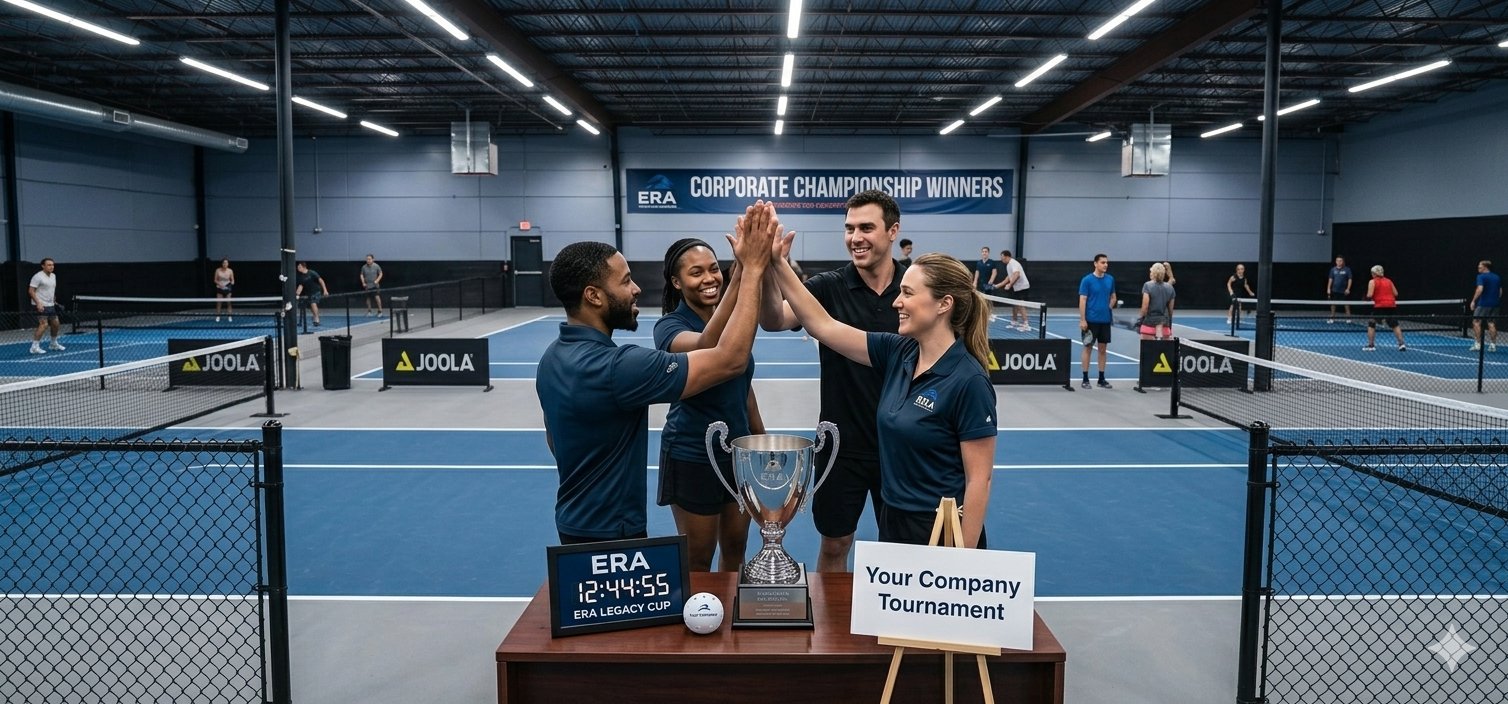
A note on the environment matters as well. The best training spaces in this sport are places you want to return to because the coaching staff treats you as a player with a unique path. Our teams at Era Pickleball balance the seriousness of goal-oriented training with the warmth of a community space. This balance matters because when you feel supported, you take more chances. You push yourselves to experiment with new shot types or to stretch the distance you can cover around the kitchen. You also learn to accept the occasional misstep as part of the learning curve, not a personal shortfall.
What then is the right way to choose a program? It begins with a candid assessment of your goals. If you want to tone your body and improve your coordination, a general pickleball training pathway that emphasizes movement and shot control can be perfect. If you aspire to compete in open divisions, you need a more rigorous plan with higher frequency, precise feedback, and a clear progression toward competitive match play. The Era Pickleball coaching staff works with players to define that path and keeps returning to it as the sport and the player evolve. We believe in a flexible system that adapts to changing goals without losing sight of the fundamentals.
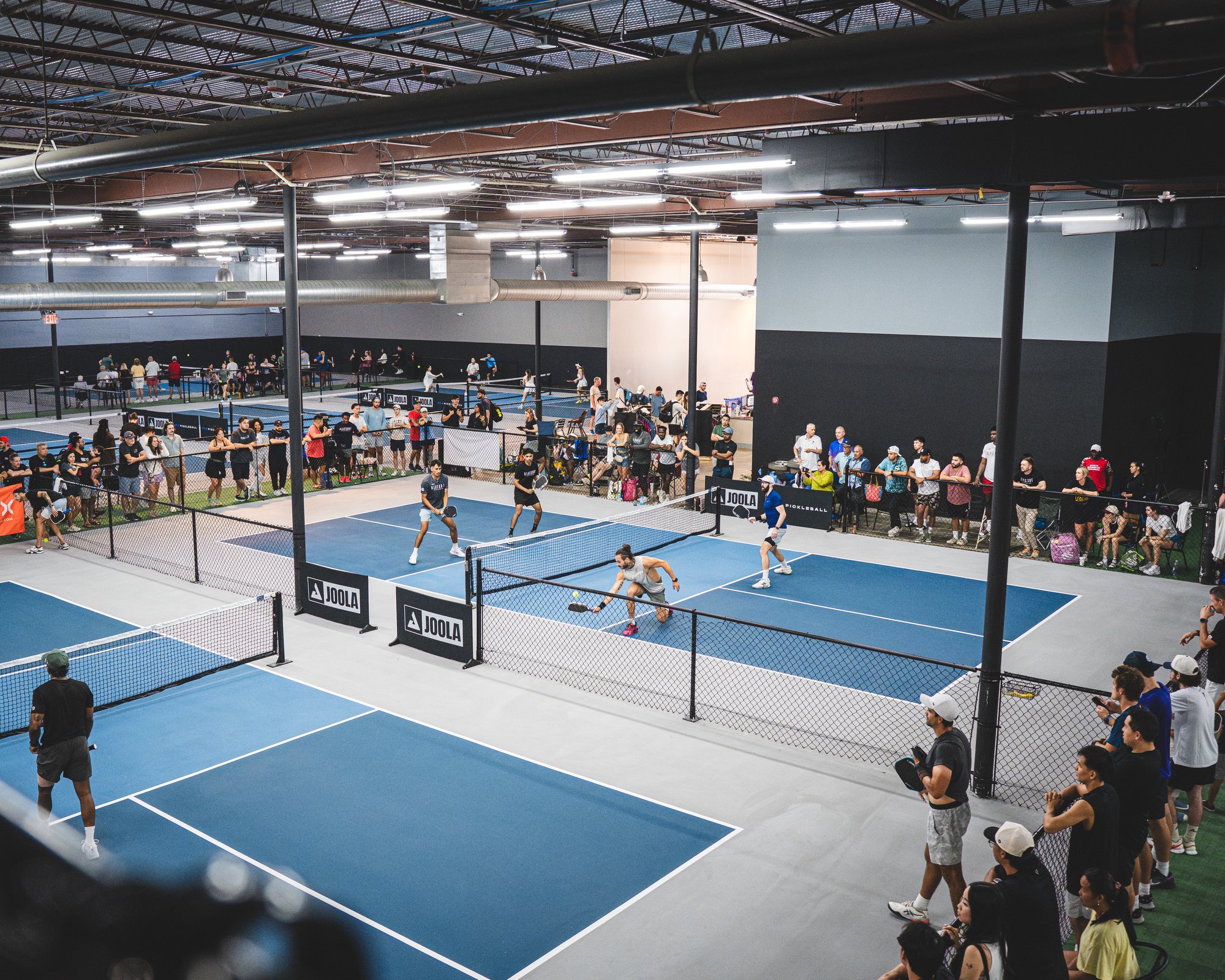
In this domain, communication matters as much as drills. A coach who can explain why a particular movement helps a specific shot, who can show you the micro-cues that indicate correct form, and who can translate those micro-cues into a simple set of reminders for on-court use, becomes a trusted partner. The best coaches are not just technicians; they are mentors who carry a quiet confidence that a player can improve. It is that trust and the clarity of direction that makes Era Pickleball coaching stand out.
Let me close with a practical guide for players who want to build a personal training plan anchored in Era Pickleball resources. First, identify your current level and your most important target for the next phase. If you are new to the sport, begin with foundational pickleball classes to solidify basics. If you already move well and can rally, target a block that expands your tactical options around the non-volley zone and your transition to the net. Second, commit to a sustainable schedule. Three to four sessions per week works well for many players. The exact mix—technique, movement, live play—should reflect your strengths and your gaps. Third, track progress not by inches gained in a single week but by the consistency of your results across multiple sessions and several opponents. The best measures are your own performance in the moments that look the same as a real match.
The Era Pickleball ecosystem includes a range of offerings to match these needs. For those curious about the broader landscape, there are pickleball classes that emphasize different facets of the game. You might start with beginner modules, then move into more targeted programs focusing on volley technique or serve variety. The training philosophy remains the same across these programs: build reliable mechanics, cultivate adaptive decision making, and integrate physical readiness with on-court strategy. When you combine that with the supportive coaching culture and the progressive coaching pathways, you have a route that is both practical and aspirational.
To return to the core premise: training for every skill level requires respect for where you are and clarity about where you want to go. The techniques, the movement, and the decision-making processes are not isolated elements. They are a single, living system that grows more robust the more you train it. The Era Pickleball approach is not a one-size-fits-all diagram but a map that changes with your feedback and with the maturation of your game. We measure progress in tangible terms—shots stabilized, rallies extended, and the sense that you can see a plan working when you step onto the court.
Two practical notes for prospective players who are considering Era Pickleball pickleball classes or coaching:
- If you are curious about the specific structures used in training, you will encounter a blend of technique-focused blocks, movement work, and live play. Each block is designed to reinforce the others, so the body learns not just a single movement but a whole sequence of actions that connect to the bigger picture of match play.
- If you are evaluating whether to enroll in a formal pickleball training program, consider your time horizon. Short-term gains may come from quick drills, but long-term improvement hinges on consistent application and a coaching team that tracks your development over months.
In practice, that means when you join eras pickleball training programs you receive not just a sequence of drills but a coherent approach that respects your pace. It means you walk away from each session with a clear sense of what you improved, what remains challenging, and how to approach the next practice with sharpened intent. You leave the court with a new rhythm in your step and a sharper understanding of how to convert practice into performance.
If your aim is to deepen your game while staying grounded in your body, Era Pickleball is built to support you. The combination of structured programs and adaptive coaching creates a pipeline through which players can progress at their own speed while still pushing into new frontiers of skill. For many players, the true value of training is the confidence that comes from knowing you can adjust to an evolving opponent and an ever-changing court. That confidence is not born in a single drill; it grows through repeated exposure to the kinds of scenarios you will face in real matches.
As you consider Era Pickleball pickleball training options, remember that the sport rewards patience and precision. It rewards a coach who sees your potential and a student who follows through with practical, repeatable practice. It rewards a community that shows up for you when fatigue makes you doubt the process. And it rewards you, the player, who can translate what you learn on the court into a higher level of play in competitive settings, in social games, and in every rally that keeps you moving and engaged.
In the end, the best training program is one you love enough to keep showing up for, week after week, season after season. The best coach is the one who can translate the art of the dink into a reliable habit you can rely on, even when the pressure rises and the court feels crowded. The Era Pickleball system strives to do just that: to create an environment where progress feels achievable, where learning is continuous, and where players of all levels find their path forward through careful coaching, thoughtful practice, and a community that celebrates every small victory along the way.
If you are reading this and wondering where to begin, consider one of the most practical steps you can take: reach out to Era Pickleball for an introductory session or a beginner-friendly class to assess your baseline and begin building your plan. From there, the journey unfolds in a series of deliberate, carefully designed steps that honor your pace while nudging you toward better performance. It is a process that respects your body, your time, and your goals, and it is a process that can lead you to a more confident, capable, and consistent game on the pickleball court.
Ends · ZIONRIVZ956