Explore Era Pickleball: A hub for pickleball classes and Training
Era Pickleball has grown from a neighborhood court routine into a purpose-built hub for players at every level. When you walk through the doors at erapickleball.com, you’re not just signing up for a class or booking a private session. You’re stepping into a space where coaching, technique, and community converge to push your game forward. In this article, I’ll share what makes Era Pickleball distinctive, how the coaching and programming work in practice, and what you can expect if you’re considering a commitment to pickleball classes Era Pickleball offers. I’ll also touch on the realities of training in a sport that stages most of its progress in the gray area between skill and feel.
The first thing to understand about Era Pickleball is the breadth of its offerings. This is not a single drill library or a set of generic workouts repackaged as new. The team builds programs with clear objectives, measurable progressions, and an awareness that every player arrives with a different background. For some, pickleball is a daily ritual that blends fitness with social connection. For others, it’s a performance sport where efficiency, shot selection, and decision-making determine the difference between winning and tasting defeat. Era Pickleball recognizes that spectrum and designs classes to meet players where they are, then gently nudges them toward the next level.
A strong first impression comes from the coaching philosophy. Era Pickleball coaches bring real-world court experience, not just textbook theory. You’ll hear them describe matches, drills, and adjustments with concrete language: the way a player adjusts their split-step to read a drive, or how a dink should sit on the paddle face to bite the bounce. It’s not about memorizing a sequence of moves; it’s about building a toolkit that can adapt to the pace of a rally, the height of a shot, and the quirks of a partner you’re covering the court with. That practical stance matters because pickleball is a game with rapid evolution. The ball slips, the wind shifts, and a good coach makes space for improvisation while still holding a line on fundamentals.
If you talk to players who’ve trained at Era Pickleball over a season, you’ll hear a recurring theme: structure that still feels human. The calendar of classes is purposeful but not rigid to the point of drain. You’ll find beginner pathways that demystify the kitchen, mid-level clinics that sharpen placement and pace, and advanced sessions that stress pattern recognition and decision speed. The goal is not simply to accumulate reps but to translate those reps into options when it matters most—on the court during a decisive exchange.
The gym, or rather the court, is designed to support that flow. Surfaces are clean, nets are steady, and the lighting is tuned for comfort across morning and evening hours. The environment matters as much as the coaching. When energy on the court is balanced—competitive but not punitive—players focus on learning. Era Pickleball leans into that emotional equilibrium, recognizing that a harsh lab environment can stifle progress as surely as a stale practice routine can.
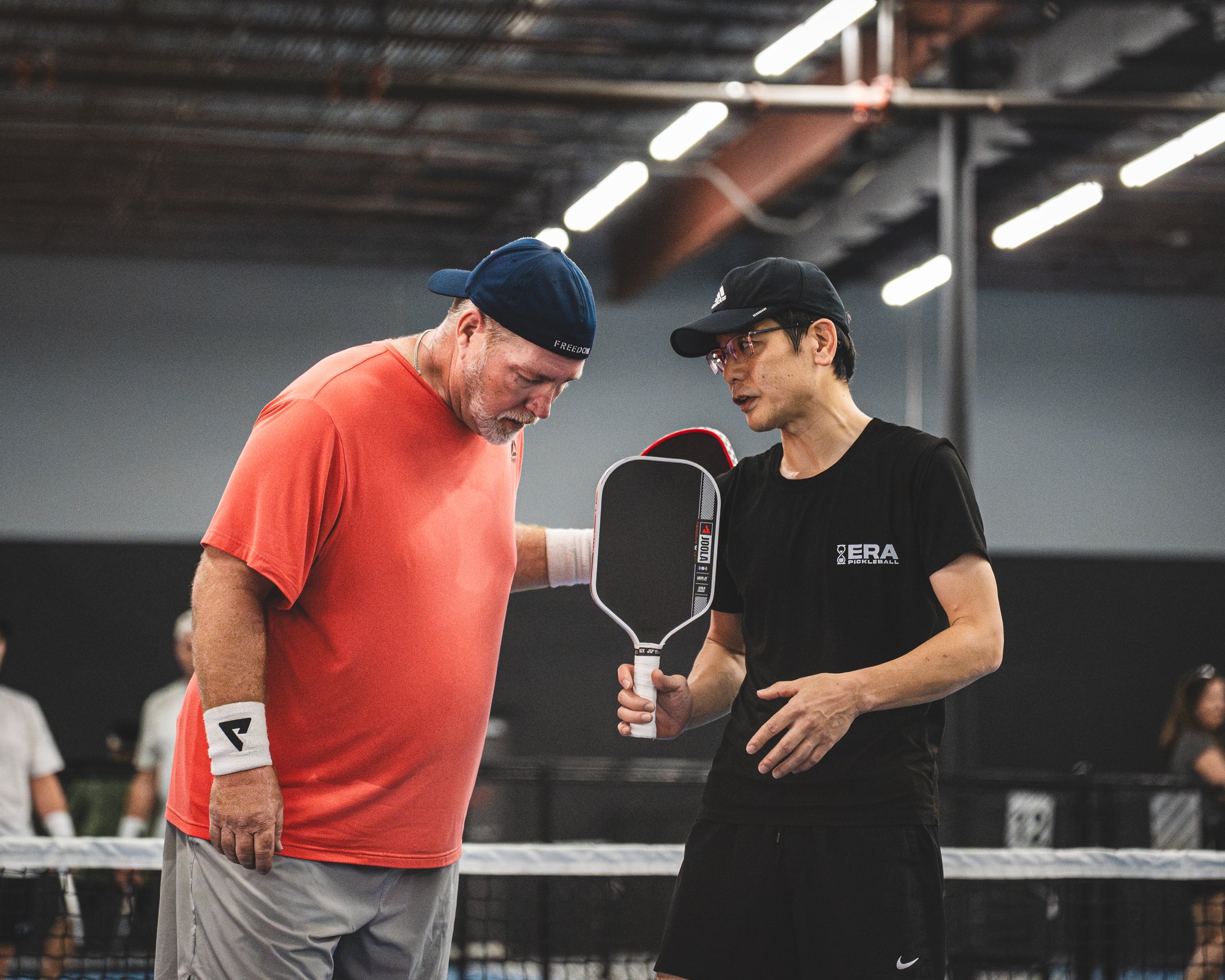
One of the strongest aspects of Era Pickleball is the integration of class formats with personal training options. You don’t have to choose between a group learning vibe and tailored feedback. The system is designed to let you dip into group classes to benefit from social proof, peer observation, and shared energy, while also booking one-on-one coaching or small-group sessions that zero in on your specific faults and strengths. This hybrid approach is especially valuable for players navigating schedule constraints or those who want to maximize the value of a single training window before a tournament or club league.
The knowledge base behind Era Pickleball is not only technical. It includes practical guidance on equipment, warmups, recovery, and even nutrition for players who are balancing pickleball with other life commitments. In my own experience, the most telling details come from the small rituals that coaching teams embed into the routine. A 10-minute pre-session drill set, a five-minute post-match debrief, and a simple, repeatable recovery protocol after a long day of practice all contribute to a sustainable training habit. The aim is to help players stay consistent over weeks and months, rather than sprint for a single high-performance target and burn out.
What makes Era Pickleball’s coaching staff credible goes beyond their on-court skill. The team is composed of versatile communicators who know how to translate complex mechanics into intuitive cues. They use language that sticks without oversimplifying. A common refrain you’ll hear is about “timing the contact,” “holding the line with your groundstrokes,” and “reading the partner’s intent in real time.” These phrases aren’t catchwords; they reflect a framework for diagnosing errors in live play. Instructors don’t expect perfection instantly. They expect players to gain a reliable sense of what correct mechanics feel like and to carry that sense into drills, then into practice matches.
For players evaluating whether to enroll, the question often comes back to results. Do you walk away with a tangible improvement after a block of pickleball classes Era Pickleball runs? The answer varies with the individual. In my observation, players who keep a steady cadence—attending weekly sessions, taking advantage of feedback windows, and applying what they learn during free-play with partners—see cumulative gains. Improvements show up in several forms: more consistent resets after a dink exchange, fewer unforced errors in the transition zone, and a sharper sense of when to attack versus when to reset. It is not uncommon to notice a noticeable lift in both stamina and shot selection after about six to eight weeks of consistent attendance. For some, the changes are subtler but meaningful: better rhythm, a more economical approach to movement, and the confidence to try a new tactic in a live game.
The following sections explore what to expect in different stages of involvement with Era Pickleball. If you are new to the sport, the entry point is often a fundamentals-focused curriculum that puts your hands on the paddle with correct grip, stance, and swing path. For players who have some experience, there are performance-oriented clinics that emphasize speed, footwork, and shot versatility. And for seasoned players aiming to compete, Era Pickleball offers coaching that targets match strategy, partner coordination, and mental resilience under pressure.
A real advantage of choosing Era Pickleball is the transparency around progression. The staff are clear about what success looks like at each stage. They don’t promise overnight mastery, but they do promise a structured path forward. That clarity helps players manage expectations and stay motivated through inevitable plateaus. If you’ve ever wondered whether your practice time is being well spent, you’ll appreciate the way Era Pickleball frames learning objectives around concrete outcomes rather than vagaries of improvement. It’s not about chasing a myth of instant refinement; it’s about building durable skills that endure through a season of tournaments, club leagues, or weekend social play.
The practice environment matters, but so does the culture. Era Pickleball has worked to cultivate an ecosystem where questions are welcomed, where mistakes are treated as data rather than disqualifications, and where the focus is on collective growth as much as individual progress. Players attend to one another’s learning curves with a supportive, yet honest, tone. If you’ve played in spaces where instruction doubles as critique, you’ll notice a different dynamic here. The coaches give precise feedback with the aim of enabling better self-correction, not discouragement. The result is a culture that encourages experimentation while keeping the pace of learning intentional and sustainable.
Now, let’s move from philosophy to practice. What does a typical week look like if you enroll in pickleball classes Era Pickleball offers? An average schedule might include several components, from drop-in technique clinics to longer, more immersive programs. A regular student might structure their week to balance skill work with match play, while also weaving in restorative sessions designed to reduce wear and tear on joints and tendons. The balance helps ensure you’re not grinding through endless drills without time to assimilate what you’re learning. It also creates opportunities to test new skills in friendly competition, which is essential for transferring practice room mechanics to real-world rallies.
A substantial portion of the value comes from the coaching cadence that runs through the season. Expect warm-ups that include dynamic mobility and light plyometrics, rounded out by targeted drills that emphasize court coverage and shot selection. You’ll encounter feed-forward cues and live coaching that reinforces correct choices during a drill or match. The best instructors will interrupt a rally at the right moment not to critique with a harsh tone but to prompt a quick adjustment and then let the rally resume. This keeps energy high and the learning loop tight.
To understand the breadth of what Era Pickleball can deliver, consider the types of programs and coaching you might encounter, along with the practical benefits they yield. The classes cover the fundamentals of the grip, paddle angle, and swing mechanics, but they also emphasize strategic thinking—how to control the pace of a rally, how to use the kitchen to your advantage, how to convert defense into offense, and how to recognize patterns that signal an opponent’s next move. Coaching sessions dive deeper into reading the opponent, managing your own fatigue, and refining your short and mid-range shots to keep your points in your wheelhouse even as pressure rises.
If you’re curious about the practical effects of training with Era Pickleball, you’ll likely want a sense of what the experience feels like on court. The sound of contact in a well-timed dink, the soft thud of a drive that skims the net tape, and the quick step into a fast volley all become part of a recognizable rhythm. It is a rhythm you learn to trust because you have heard it in drills, seen it on video analysis, and felt it during live play. The coaches often encourage players to review footage from practice or matches to observe how a rally unfolds—where decisions were made, where timing broke down, and how small adjustments could have altered a point.
In addition to the technical and tactical learning, there is the human element. You will meet players who come from varied backgrounds and ages, each bringing a different perspective to the game. The court becomes a shared space where stories intersect with technique. Perhaps you’re a parent who wants to stay active while watching a kid practice on a nearby court, or a retiree seeking a social sport that still offers a robust workout. Era Pickleball respects those motives and designs its programs so that social interaction does not erode the seriousness of skill development. You can learn while you laugh, you can push yourself while you cheer a partner across the net, and you can find a sense of belonging without feeling obligated to adopt a single, narrow identity as a player.
One practical advantage for many players is the flexible approach to scheduling. If your calendar is irregular, you can pick and choose classes without feeling like you are missing a step in a longer curriculum. If you prefer the structure of a weekly plan, you can enroll in a sequence of sessions that build on one another. This flexibility is not a casual perk; it is a deliberate design choice meant to accommodate busy lives while preserving the continuity necessary for real progress. For families, the model can be especially attractive, because kids and adults might share space in the same facility and benefit from a community that spans generations.
There are also notable edge cases worth considering. For players returning after a break, a refreshed approach to fundamentals can help re-establish confidence quickly. For athletes in other sports, transferable skills such as footwork, hand-eye coordination, and tactical awareness often translate neatly into pickleball, but the pace of learning can require a period of adaptation. Coaches at Era Pickleball are mindful of these transitions and tailor the pathway accordingly. It’s not unusual to see a crossover athlete pick up a new dimension of agility in a few weeks, then apply it to more complex layouts on the court.
learn moreTurning to the practicalities of enrollment, you’ll find the site erapickleball.com a reliable resource for current schedules, instructor bios, and program descriptions. The content reads like the product of people who genuinely enjoy teaching and who want to help you move forward rather than simply clock in hours. Pricing structures vary based on the level and length of the program, with options for drop-in sessions and multi-session packages. For many players, the value lies not only in the instruction itself but in the ongoing access to a supportive community—an environment that makes practice feel purposeful rather than a chore.
In my experience, the best way to evaluate any program is to participate with a precise goal in mind. Do you want to tighten your dink game, improve your transition from backcourt to kitchen, or become more consistent at volley exchanges? Identify the target first, then select the class or coaching arrangement that aligns with that objective. The right choice will feel less like attending a generic class and more like joining a tailored training conversation that adapts as you improve.
A closer look at two core categories reveals how Era Pickleball translates philosophy into action. First, pickleball classes Era Pickleball offers are designed to deliver not just technique but also an understanding of how to apply that technique under pressure. In many sports, practicing the move is the end of the road; in pickleball, the move is just a bridge to several tactical outcomes. A well-run fundamentals session teaches you not only how to hit a backhand cross-court dink but also how to decide whether to hold your ground, move in for a put-away, or reset to avoid a risky exchange. The feedback loop is tight, and coaches frame corrections as short adjustments that fit naturally into your next rally, which makes the learning feel practical rather than abstract.
Second, pickleball coaching at Era Pickleball extends beyond the court into the realm of match play and strategy. Coaching here recognizes that the highest returns come from combining technical mastery with decision-making speed. Practitioners learn to anticipate patterns, exploit space, and manage risk through shot selection and tempo control. The coaching staff routinely uses match-play simulations with built-in constraints to emphasize particular concepts, such as controlling the net or defending a high-percentage opposite-wing attack. The aim is to create players who can improvise intelligently in real games, not just in controlled drills.
To bring this to life, picture a typical advanced clinic. The group sprawls across the court, partners pair up, and a series of short bouts abounds. A coach floats between pairs, offering micro-adjustments: adjust your paddle angle to create a deeper corner of the court, shift your stance slightly to improve your balance during a cross-court drive, or reset your feet when you sense your opponent is about to pounce. The discussions are precise yet practical. You don’t hear vague platitudes; you hear targeted observations that you can implement in the next rally. After a few rounds, the clinic moves into a live practice match where the same cues are applied in a dynamic setting. The energy shifts as players test small changes under competition pressure, and the coaches provide just-in-time coaching that helps crystallize the experience.
Beyond the on-court experience, Era Pickleball pays attention to how players sustain their practice over time. The organization encourages players to log their progress and reflect on their improvements. Some facilities deploy video analysis, allowing players to see their paddling mechanics from the lens of a camera and a coach’s eye. When used thoughtfully, this tool can help you recognize asymmetries in your footwork, understand how your weight distribution changes during a shot, and observe where the rally starts to tilt in an opponent’s favor. The best moments in training often come when you compare your perception with the actual data and come away with a revised mental model that makes sense on the court.
If you are reading this and wondering how to begin your own journey with Era Pickleball, the path is straightforward but thoughtful. Start with a baseline assessment that gauges your current level and identifies your most pressing gaps. This baseline becomes the yardstick against which you measure progress as you accumulate hours on the court. From there, you can chart a practical course using the available pathways: you might choose a weeknight fundamentals class to establish core skills or opt for a weekend clinic that tackles specific tactical themes like transition play or net pressure. The beauty of the model lies in the balance between guidance and autonomy. You receive a solid framework, but you also have the agency to tailor your practice in a way that respects your personal schedule and goals.
Two lists capture essential considerations when evaluating a program like Era Pickleball. They are not exhaustive, but they summarize the kinds of decisions players commonly face.
-
What to look for in a program
-
Clear progression that matches your level
-
Qualified coaches with on-court experience
-
Structured practice that blends technique with game sense
-
Opportunities for feedback and self-equipment review
-
Flexible scheduling and accessible pricing
-
How to make the most of pickleball training
-
Attend consistently to build motor memory
-
Bring a notebook or video log to track small wins
-
Practice with partners who push but also support
-
Focus on habits that extend beyond one drill
-
Reassess goals after a block of sessions and adjust
These lists are designed to function as practical touchpoints as you explore era pickleball classes and coaching options. They reflect the kinds of decisions I’ve seen players wrestle with when they commit to a structured training path. If you decide to pursue pickleball training at era pickleball, you’ll often find that the real value lies in the combination of a thoughtful curriculum and a community that supports your growth.
In the bigger picture, the appeal of era pickleball rests on the sense that you can grow as a player without giving up your other life commitments. The courses and training formats are built with real schedules in mind, and the coaching perspective respects your time while challenging you to lift your game in meaningful ways. The sport itself rewards a nuanced approach: you don’t simply hit more balls; you learn to hit the right ball at the right moment, with an awareness of your opponent and a plan for the next three shots. Era Pickleball translates that ideal into practice by pairing rigorous coaching with accessible programming and a culture that invites beginners to become confident players and experienced players to become strategic thinkers.
For those who care about measurable outcomes, there is a practical path to tracking progress. You can observe improvements in rally length, shot accuracy, and decision speed, and these qualitative developments often accompany a more formal, quantitative set of metrics. Coaches may quantify improvements in rally win rates for certain patterns, reductions in unforced errors, or increases in successful off-speed attack plays. The exact metrics will vary by program, but the principle remains constant: training is more effective when you can see and feel the difference between where you started and where you end up.
In my own practice and observation, the best participants are those who integrate the lessons learned in class into their daily play. They do not rely solely on the coach to carry them through. Instead, they carry a notebook of cues, a comfort with a few reliable patterns, and a willingness to practice deliberately. That combination—structured guidance plus personal accountability—produces results that endure beyond the closing whistle of a clinic or the final rally of a practice match.
If you want a clear takeaway, it’s this: Era Pickleball offers a robust ecosystem designed to deepen your skills through deliberate practice, thoughtful coaching, and a supportive community. It is not a one-size-fits-all solution, but a carefully designed framework that respects differences in goals, pace, and experience. The coaching staff understands that progress is rarely linear and that the most important victories happen in small, repeatable improvements. The culture, the curriculum, and the environment all reinforce that message, making era pickleball a compelling option for players who want to grow with intention.
In the end, the question isn’t merely whether Era Pickleball can teach you better forehands or more effective transitions. It is whether you want to become the kind of player who can read a point, adjust on the fly, and contribute to a team effort with confidence. If that’s your aim, the journey through pickleball classes Era Pickleball offers can be a rewarding one. The investment is not only in the hours spent on the court, but in the habits formed off the court as well—habits that stretch beyond the white lines and into every other sport, hobby, or challenge you decide to take on.
As with any athletic pursuit, the ultimate test remains the same: how well can you translate practice into performance when the rally is tight and the pressure is high? At Era Pickleball, the answer you’re likely to hear from coaches, fellow players, and even from your own reflective practice is optimistic but grounded. It’s an invitation to elevate your game without losing the joy that brought you to the court in the first place. If you’re curious about the next steps, start by exploring the range of pickleball classes Era Pickleball has on offer, consider booking a trial session to gauge fit, and approach your training with the humility to learn and the discipline to persist. The result could be not just better technique, but a deeper, more satisfying relationship with a sport that rewards attention, patience, and teamwork.
Ends · ZIONRIVZ956